
How to Limit Your Exposure to Pesticides in Produce
Pesticides and "forever chemicals” are a serious concern for our health and the environment. Nearly 75% of produce screened tested positive for pesticides, according to the EWG’s annual analysis. If you want to reduce your exposure to pesticides, we will consider which produce contains the highest and lowest amounts of pesticides and what you can do to limit your exposure.
The easy answer is simply buy organic. Organic produce has been found to contain a significantly lower traces of pesticides than non-organic produce. However, most organic produce is more expensive than non-organic produce. On average organic produce is 59% more expensive than its non-organic counterpart. Some produce such as Roma Tomatoes are up to 133% more expensive. The reality is most of us have to choose our battles and weigh our risks vs. benefits from our grocery list and then bill. This article will help you to choose what produce is worth the investment and best for you and your family.
Where the produce was grown is another significant factor to determine the amount of pesticides. U.S. grown vs. imported produce contains varying amounts of pesticides. For example, imported strawberries fall under “very high risk” and only 1/2 of the serving size should be consumed per day whereas domestic strawberries fall under “moderate risk”. Or, greens beans that fall under “very high risk” for imported organic and non-organic. Check out the extensive graph here.
It is important to understand which specific produce we SHOULD buy organic and which products we can buy non-organic, if necessary, and which produce we SHOULD buy domestically or imported. Most importantly, regardless of these considerations, continue to enjoy all your fruits and vegetables for all their benefits!
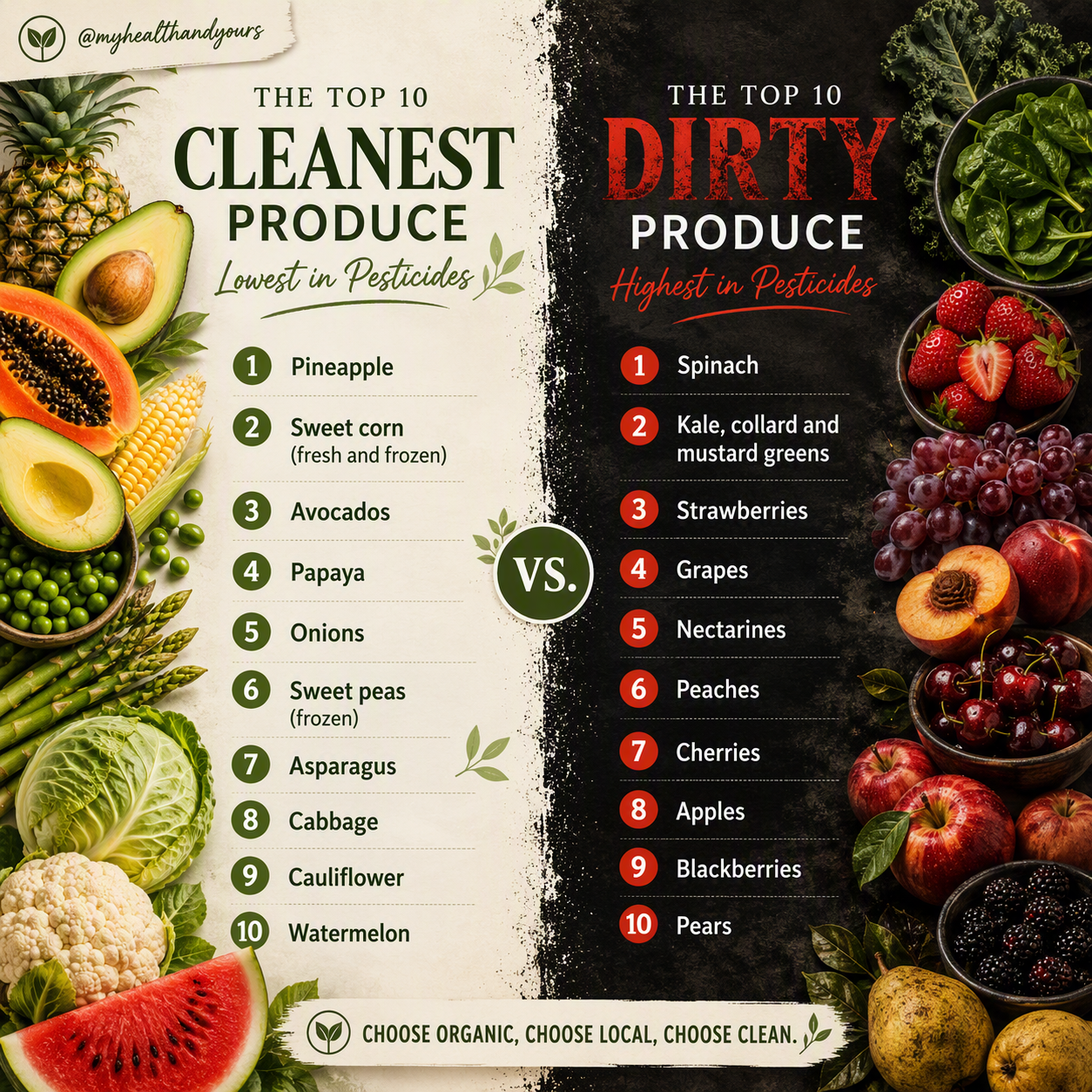
Top 10 List of “Clean” Produce and “Dirty” Produce
Resources:
EWG Science Team. (2026, March 24). EWG’s Shopper’s Guide to pesticides in produce | summary. Environmental Working Group. https://www.ewg.org/foodnews/summary.php
Gunara, M. (2026, May 18). Grocery bills exceed $10,000 in some states as organic produce costs 59% more. LendingTree. https://www.lendingtree.com/debt-consolidation/organic-vs-conventional-study/
Roberts, C. (2025, October 30). Produce without pesticides. Consumer Reports. https://www.consumerreports.org/health/food-contaminants/produce-without-pesticides-a5260230325/
